


Two homeowners call about the same problem: sewage backing up, a slow drain, a smell coming from the yard. Both get quotes. One comes back at $1,800. The other comes back at $6,400. Neither contractor is lying. The difference is almost never about profit margins. It is about what is actually under the ground, how deep it sits, what it is made of, and what it will take to reach it without destroying everything above it. Understanding what drives those numbers is the first step toward making a confident decision rather than just picking the lower figure and hoping for the best.
The Ground Tells You the Price Before the Shovel Does
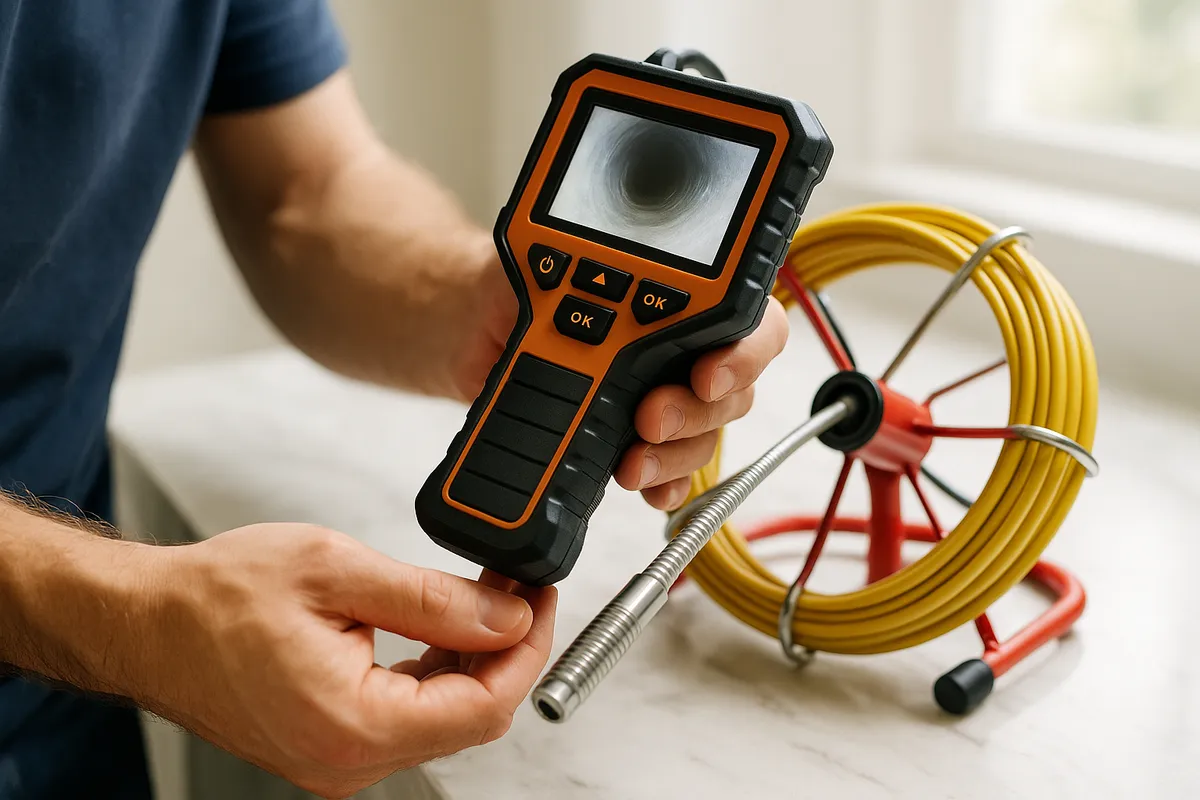
Before any work begins, a camera inspection is the starting point. Flow-Rite Plumbing and Drain Service runs a line camera through the pipe to locate the problem, identify the pipe material, measure the depth, and map what is sitting above or around the damaged section. That inspection alone shapes the entire estimate.
Pipe depth matters enormously. A line running four feet down costs far less to access than one running eight or ten feet. Older homes in the Fayetteville, NC area, particularly those built before the mid-1980s, frequently have clay or cast iron pipe that has shifted, cracked, or collapsed over decades. Clay is brittle. It does not flex with soil movement, and once root intrusion starts, it accelerates quickly. Replacing clay at depth is a different job, in time and material, than patching a four-inch section of modern PVC sitting close to the surface.
Soil conditions add another variable. Sandy, loose soil around areas near Raeford Road and Bragg Boulevard can shift trench walls and require shoring. Compacted clay soil elsewhere in the county holds better but resists digging and adds labor hours. Neither condition is obvious from the surface.
What Is Above the Pipe Changes Everything Below It
Access is a pricing factor most customers do not think about until they see the itemized breakdown. A pipe running under an open lawn costs far less to reach than one running under a concrete driveway, a patio slab, or a mature tree with a root system spread across thirty feet of yard. Concrete removal and replacement is a separate line item, and it is not a small one. Expect $800 to $2,000 or more added to a job the moment a saw has to cut through a surface.
Tree roots are among the most common causes of pipe failure in established neighborhoods. A single large oak or sweet gum can send roots sixty feet from its base, and they follow moisture directly into any joint or crack. Flow-Rite Plumbing and Drain Service has observed that root intrusion jobs often look simple on the surface but require full section replacement rather than just clearing, because the pipe wall is already compromised at the entry point and will fail again within months if it is only cleaned.
Homes in communities like Arran Hills or Westoverwhere mature trees are common and lots are densely landscaped, tend to see this pattern regularly. The cost is not inflated. It reflects the actual scope of what needs to come out of the ground.
The Repair Method Itself Carries a Different Price Tag
Not every damaged line requires open excavation. Trenchless pipe lining, sometimes called CIPP (cured-in-place pipe), installs a resin-saturated liner inside the existing pipe, which then hardens into a smooth new surface. It costs more upfront than a simple dig-and-replace on a shallow, accessible line, but it eliminates the cost of surface restoration. On a job where the alternative is cutting through a driveway or digging through a finished landscape, trenchless often comes out cheaper in total.
The trade-off is that lining is not always appropriate. Pipes with significant collapse, severe offset joints, or sections that have fully separated cannot be lined. The camera inspection determines which method is viable. A contractor quoting trenchless without first running a camera is guessing, and that should raise a flag immediately.
Permit requirements in Cumberland County also factor in. Permitted work requires inspection, which adds a day to the timeline but protects the homeowner. Any quote that omits permit fees on a full sewer line repair should prompt a direct question about why.
Why Two Quotes for the Same Job Look Nothing Alike
The most common reason two estimates diverge sharply is that they are not actually quoting the same scope. One contractor may be pricing only the damaged section identified on camera. Another may be pricing the full run from the house to the municipal tap, because the camera showed deterioration along the entire length. Both are technically quoting the same symptom, but entirely different solutions.
Labor rates vary as well, though less than most people assume among licensed contractors in the Jack Britt area. The bigger variables are material specification, warranty terms, and whether the quote includes backfill compaction and surface restoration or stops at the pipe itself. Always ask for a line-by-line breakdown. A quote that lists only a single total number for a job of this size is not giving you enough information to compare it fairly against anything else.
For homeowners in Fayetteville, NC trying to sort through competing estimates, Flow-Rite Plumbing and Drain Service is a straightforward resource. They work throughout the Jack Britt area and can be reached at 3095 Tyson Plantation Rd, Fayetteville, NC 28306, or by phone at (910) 466-4419.
Frequently Asked Questions
What factors affect the cost of fixing my plumbing issue?
The cost is primarily influenced by the depth and material of the pipes, as well as the condition of the surrounding soil. For example, accessing a pipe four feet deep is less expensive than one that is eight or ten feet down. Additionally, if concrete or tree roots are involved, the costs can increase significantly due to the need for extra work to remove and replace surfaces.
How does Flow-Rite Plumbing determine the best repair method?
Before any work starts, a camera inspection is conducted to locate the problem and assess the pipe’s condition. This inspection helps determine if trenchless pipe lining is viable or if a traditional dig-and-replace method is necessary, which can greatly impact the overall cost and approach.
What should I prepare for when getting a plumbing estimate?
It’s essential to have a clear understanding of the symptoms you’re experiencing and any visible signs of damage. Be prepared to provide information on the age of your home and any past plumbing issues, as older homes may have different materials that can affect cost and repair options.
What common mistakes do homeowners make when comparing plumbing estimates?
A common mistake is not asking for a detailed line-by-line breakdown of the quotes. Homeowners may assume two estimates are for the same scope of work when they might not be, as one contractor could be pricing only the damaged section while another includes the entire length of pipe if deterioration is noted.
Get Directions to Flow-Rite Plumbing and Drain Service
🎧 Listen to this as a podcast
Also on Apple Podcasts, Spotify, and Amazon Music.